Developmental Stages of Luciobarbus xanthoptrus Eggs and larvae After Artificial Fertilization in Basra Province
Keywords:
xanthoptrus barbell, artificial breeding, morula, blastula.Abstract
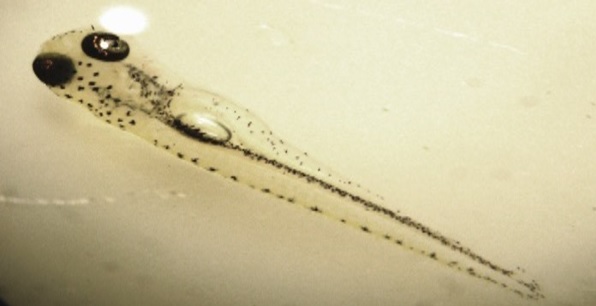
The artificially induced breeding of the xanthoptrus barbell (Luciobarbus xanthoptrus) was carried out at the Marine Science Center University of Basrah. The fish used in the experiment ranged in weight from 1500 to 6500 grams and were 2-4 years old. Pituitary gland extract from common carp was used for hormonal treatment at a concentration of 6 mg/kg with two equal doses (3 mg/kg each) administered at a 12-hour interval. After obtaining the sexual products, artificial fertilization was performed by fertilizing the eggs obtained with dry-mixed milt first, followed by the addition of water to activate the milt. The eggs were then incubated in conical glass bottles at a rate of 70 g per bottle, with a flow of 2 liters per minute. The incubation temperature ranged from 22-24°C. Two hours after egg washing, an 88% fertilization rate was recorded. The embryonic development stages of the xanthoptrus barbel during artificial fertilization were described. The incubation period lasted for 72 hours, during which the stages of embryonic development were observed every 2 hours when examining the fertilized eggs under a microscope. Cell division began within the first hour, followed by the eight-cell stage, morula, blastula, and finally the embryo. After hatching, the hatched larvae were monitored and their larval development was recorded every 4 hours.
References
Abbas, H. H., Bawazir, A. S., and Ali, A. M. (2016). Embryonic and larval development of Gattan (Barbus xanthopterus Heckel) from the Tigris River system, Iraq. International Journal of Fisheries and Aquatic Studies, 4(6), 474–482.
Al-Faisal, A. J., Jaber, A. A. Almukhtar, M. A., Saleh, J. H., Al-Zaidi, F. M. J., Hassan, A. M., and Abdullah, S. A. (2011). Morphological characteristics of hybrid male benni fish (Barbus sharpeyi) with female gattan (Barbus xanthopterus) King Abdulaziz University Journal, Volume 22, Issue 1, 19-22.
Al-Faiz, N. A., Al-Najar, G. A., Al-Zaidy, F. M., Younis, K. H., and Jabir, A. A. (2022). Effect of mixed and artificial feeding on the growth performance of Gattan Luciobarbus xanthopterus Heckel, 1843 larvae. International Journal of Aquatic Biology, 10(3), 229–233.
Ali, A. M. (2012). Larval development of the cyprinid fish Barbus sharpeyi (Günther, 1874). Journal of Fisheries and Aquatic Science, 7(5), 307–319. https://doi.org/10.3923/jfas.2012.307.319
Al-Hussaini, S. M. (2011). Evaluation of the economic status of fishing in the Tigris and Euphrates Rivers: The case of the gattan (Barbus xanthopterus). Journal of Marine and Arab Sciences, 5(3), 78-90. University of Baghdad.
Al-Mukhtar, M. A., Saleh, J. H., Jaber, A. A., Al-Zaidi, F. M., Hassan, A. M., Hussoni, K. H., Abdul-Ghani, S., and Al-Shawei, N. H. (2009). Artificial propagation of Gattan (Barbus xanthopterus Heckel) in Basrah, Iraq. Iraqi Journal of Aquaculture, 6(2), 71–94.
Al-Najare, G. A. (2020). The use of fish diversity as a guide for assessing the marshes environment using life evidence in the East Al-Hammar Marsh, Southern Iraq. Ph.D. Thesis. The College of Agriculture, University of Basrah. 247P. (in Arabic)
Al-Rudainy, A. J., Hassan, H. A., Ahmed, S. S., Saad, S. A., and Hussain, Y. S. (2002). Age and growth of Barbus xanthopterus in Euphrates River near Al-Hindia barrier. Journal of Fisheries, 21, 78–80.
Al-Rudainy, A. J., Mohammed, A. M., and Abbas, L. M. (2006). The Environment and Biology of the gattan Barbus xanthopterus (Heckel) in the Euphrates River, Central Iraq.” Umm Salamah Journal of Science, Vol. 3, No. 4, pp. 595-603. University of Baghdad, College of Science for Women.
Al-Rudainy, A.J., Salman, N.A., Al-Mahdawi, G.J.A.A., Ruhaige, A.M., Fadil, A.A., Farhan, R.K., and Abbas, I.K. (1997). Intensive culture of Gattan Barbus xanthopterus in earthen ponds. Basrah Journal of Agricultural Sciences, 10(1), 77–92.
Al-Thahaibawi, B. M. H., Younis, K. H., Al-Mayaly, I. K. A. (2019). Fish Assemblage Structure in Al-Huwaizah Marsh, southern of Iraq, after inscribed on the World Heritage List. Iraqi Journal of Science, Vol. 60, No.7, pp 1430-1441.
Al Zaidy, F. M., Al-Noor, S. S. ., & Al- Mukhtar, M. A. (2009). Assessment of the semen of common carp males (Cyprinus carpio) induced with Ovaprim and (CPG) during propagation processes. Iraqi Journal of Aquaculture, 6(1), 11–24.
https: //doi. Org / 10.58629/ijaq.v6i1.255.
Blaxter, J. H. S. (1988). Pattern and variety in development. In W. S. Hoar and D. J. Randall (Eds.), Fish Physiology (Vol. 11, pp. 1–58). Academic Press.
Carlos, J., Mendes, C., and Silva, A. (2002). Changes in embryo development and larval stages under artificial fertilization conditions. Aquaculture Research, 33(7), 519–528.
Claireaux, G., and J. P. Lagardere. 1999. Influence of temperature, oxygen, and salinity on the metabolism of the European sea bass. Journal of Sea Research, 42: 157-168.
FAO. (2011). The state of world fisheries and aquaculture 2010. Food and Agriculture Organization of the United Nations, Rome.
FAO. (2014). The state of world fisheries and aquaculture 2014. Food and Agriculture Organization of the United Nations, Rome.
Farner, K. W. (2014). Growth of juvenile gattan under laboratory conditions. Iraqi Journal of Aquaculture, Issue 2, Vol. 11: 85-96.
Farner Khalid William (2010). The natural diet of gattan larvae is cultured in two different environments using floating cages. Basrah Journal of Agricultural Sciences, Vol. 23, No. 2, pp. 169-181.
Fuiman, L. A., and Werner, R. G. (2002). Special considerations of fish eggs and larvae. In L. A. Fuiman and R. G. Werner (Eds.), Fishery science: The unique contributions of early life stages (pp. 1–32). Blackwell Science Ltd.
Geldhauser, B. (1995). Some aspects of embryonic and larval development of tench (Tinca tinca L.). Polish Archives of Hydrobiology, 42(1–2), 87–95.
Hussain, N. A., Mohamed, A. R. M., Al-Noor, S. H., Coad, B., Mutlak, F. M., Al-Sudani, I. M., Mojer, A., and Toman, A. J. (2006). Ecological indices, length frequencies, and food habits of fish assemblages of the restored southern Iraqi marsh. University of Basrah (Unpublished report).
Jabir, A. A. (2018). Effects of dietary protein levels on the growth of Luciobarbus xanthopterus juveniles (Heckel, 1843). Mesopotamian Journal of Marine Science, 33(2), 91–98.
Kamler, E. (1992). Early life history of fish: An energetic approach. Chapman and Hall.
Kane, D. A, .and Kishimoto, Y. (2002). Cell labelling and transplantation techniques. In: Zebra fish practical approach (Nüsslein-Volhard C., Dahm R., eds). Oxford University Press, Tubingen, Germany. pp. 95-119.
Kinne, O., and Kanne, E. M. (1962). Rates of development in embryos of cyprinodont fish exposed to different temperature-salinity-oxygen combinations. Canadian Journal of Zoology, 40, 231-253.
Kovac, M. (2000). Embryonic development of freshwater fish and the difficulty of tracking early stages. Hydrobiologia, 430(1–3), 15–23.
Lin, S.; Long, W.; Chen, J., and Hokins, N., 1992. Production of germ-line chimeras in zebrafish by cell transplants from genetically pigmented to albino embryos. Proc. Natl. Acad. Sci. 89:4519-4523.
Mookerjee, H. K., Saha, H. N., and Mitra, G. N. (1946). On the life-history and bionomics of Rohu, Labeo rohita (Hamilton). Proceedings of the National Institute of Sciences of India, 12, 335–355.
Nakagawa, M.; Kobayashi,T. and Ueon, K. (2002). Production of chimera in loach (Misgurnus anguillic) and proposal of new method for preservation o gered fish species. J Exp Zool 293(6), 624-631.
Saleh, J. H., Al-Mukhtar, M.A., Jaber, A. A., Al-Zaidi, F. M. and Hassan, A. M. (2012) Production of hybrid swabs from artificial breeding between females of the gattan Barbus xanthopterus and the benni Barbus sharpeyi at the Marine Science Center. Marsh Bulletin 7 (2) 119-125.
Saka, S., Altun, T., and Yıldırım, A. (2005). The influence of water temperature on the rate of hatching in freshwater fish eggs. Turkish Journal of Fisheries and Aquatic Sciences, 5, 23–28.
Downloads
Published
How to Cite
Issue
Section
License
Copyright (c) 2026 Iraqi Journal of Aquaculture

This work is licensed under a Creative Commons Attribution 4.0 International License.