Carbon Dynamics and CO₂ Fluxes in Coastal Waters and Sediments Along the Zubair Creek in Southern Iraq
Keywords:
Khor al-Zubair, carbon dioxide, total organic carbon, Alkalinity, Water quality, coastal pollution, southern Iraq, Climate change, Global Warming.Abstract
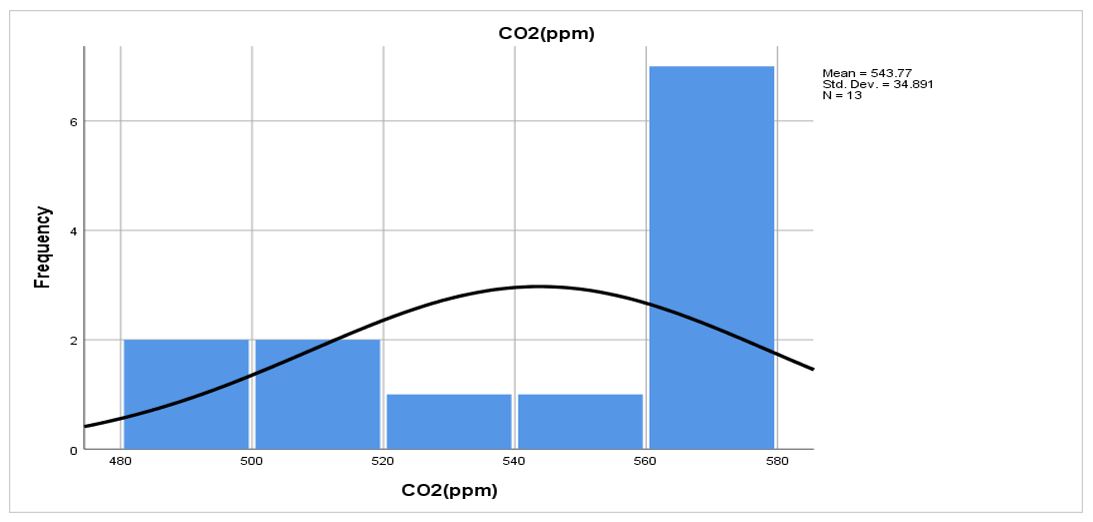
This study aimed to assess the role of Khor Al-Zubair as a carbon sink within coastal ecosystems and to understand the dynamics of carbon exchange between the atmosphere, water, and sediments under the influence of tides and industrial activities. The study was conducted at three main stations stretching from Khor Al-Zubair Port to Umm Qasr Port, with a field and laboratory monitoring program carried out over a period of 13 hours during a semi-diurnal tidal cycle. The results showed a statistically significant spatial variation in water temperature (F= 685.00, P < 0.001), which affected gas solubility and carbonate system reactions. At the same time, pH values ranged from 7.0 to 7.2, primarily influenced by tidal fluctuations (P= 0.001). Salinity also reached its highest value at Station 3 near the Arabian Gulf (52.416 ppt) and its lowest value at Station 2 (44.864 ppt), while total alkalinity ranged from 170–212 mg/L and dissolved carbon dioxide from 5.9–15.9 mg/L. Calculations of the partial pressure of carbon dioxide (pCO₂) showed high values ranging from 3,616–11,950 µatm compared to atmospheric levels (478–576 µatm), confirming that Khor Al-Zubair acts as a net source of carbon emissions rather than a carbon sink. In the sediments, the average total organic carbon (TOC) was 1.59%, with a maximum value of 4.39%, while the calcium carbonate (CaCO₃) content ranged from 7.83–26.58%, and the average total alkalinity was 428.44 mg/L, indicating that the sediments possess buffering capacity that helps limit the effects of water acidification and maintain the stability of the carbonate system. The study concludes that Khor Al-Zubair is a source of carbon dioxide emissions; however, its high alkalinity and abundance of bicarbonate and carbonate contribute to maintaining chemical equilibrium and limiting water acidification.
Metrics
References
Adkins, J. F., Naviaux, J. D., Subhas, A. V., Dong, S., and Berelson, W. M. (2021). The Dissolution Rate of CaCO₃ in the Ocean. Annual Review of Marine Science, 13, 57–80.
Alainachi, I.H., and Nasser, A.B. (2009). Stability of river branch (creek) banks in Khor Al Zubair area, NW Arabian Gulf. Eng Geol J, 14:1–12.
Albadran, B.N., and Al-Fartusi, A.L.F. (2016). Microbial mats covering recent sediments in the tidal flats of Khor Al Zubair, NW Arabian Gulf. Mesopotamian J Mar Sci, 31(2):141–158.
Al-Fartusi, A.J., and Al-Siyab, A.H.A. (2014). Study of some physical and chemical properties of Khor Al Zubair Lagoon. Al Basrah Stud. J., 24:1–19.
Al-Fartusi, K. Y., and Al-Siyab, A. A. (2021). Marine chemistry and carbonate system in Iraqi coastal waters. Basrah University Press.
Alongi, D. M. (2014). Carbon cycling and storage in mangrove forests. Annual Review of Marine Science, 6, 195–219.
Al-Saad, H. T., Al-Hassan, S. I., Jaber, A. M., and Abduljaleel, S. A. (2024). Environmental chemistry and pollution (1st ed.). University of Basrah.
Amin, A. M., and Daoud, T. J. (1990). Geography of natural resources. Dar Al-Kutub for Printing and Publishing, University of Mosul.
Burdige, D. J. (2006). Geochemistry of marine sediments. Princeton University Press.
Burdige, D.J. (2022). Marine Sediment Geochemistry: Recent Advances in Early Diagenesis and Carbon Cycling. Annual Review of Marine Science, 14, 223–247.
Chen, C. T. A., and Borges, A. V. (2009). Reconciling opposing views on carbon cycling in the coastal ocean: Continental shelves as sinks and near-shore ecosystems as sources of atmospheric CO₂. Deep-Sea Research Part II: Topical Studies in Oceanography, 56(8–10), 578–590.
Chen, X., S., and Chen, C. W.-J. (2017). Carbon biogeochemistry in estuaries: A review. Estuarine, Coastal and Shelf Science, 202, 276–288.
Cyronak, T., and Eyre, B. D. (2016). The effects of coastal acidification on carbonate chemistry and benthic ecosystems. Marine Chemistry, 186, 1–15.
Da, F., Stock, C. A., Dunne, J. P., Liu, X., Luo, J. Y., Lee, M., and Shevliakova, E. (2025). A global perspective on river alkalinity: Drivers and implications for coastal ocean carbonate chemistry. Global Biogeochemical Cycles, 39(11), e2025GB008528.
Dickson, A.G.; Sabine, C.L., and Christian, J.R. (2007). Guide to Best Practices for Ocean CO₂ Measurements. PICES Special Publication 3.
Doney, S. C., Busch, D. S., Cooley, S. R., and Kroeker, K. J. (2020). The impacts of ocean acidification on marine ecosystems and reliant human communities. Annual Review of Environment and Resources, 45, 83–112.
Drylie, T. P., Needham, H. R., Lohrer, A. M., Hartland, A., and Pilditch, C. A. (2019). Calcium carbonate alters the functional response of coastal sediments to eutrophication-induced acidification. Scientific reports, 9(1), 12012.
European Environment Agency. (2025). European climate risk assessment. https://www.eea.europa.eu
Feng, C., Ye, G., Zeng, J., Zeng, J., Jiang, Q., He, L., and Xu, Z. (2023). Sustainably developing global blue carbon for climate change mitigation and economic benefits through international cooperation. Nature Communications, 14(1), 6144.
Gaudette, H. E., Flight, W. R., Toner, L., and Folger, D. W. (1974). An inexpensive titration method for the determination of organic carbon in recent sediments. Journal of Sedimentary Petrology, 44(1), 249–253.
Goossens, C., van de Velde, S. J., and Meysman, F. J. R. (2026). A revised estimate of calcium carbonate dissolution in coastal and shelf sediments suggests large shelf exports in the marine CaCO₃ cycle. Global Biogeochemical Cycles, 40(3), e2025GB008936.
Hair, J. F., Black, W. C., Babin, B. J., and Anderson, R. E. (2019). Multivariate data analysis (8th ed.). Cengage Learning.
Hazza, M. A., and Jassim, A. K. (2024). Carbon dioxide emissions and the carbon footprint of Khor Al-Zubair, northwest Arabian Gulf, Iraq. Egyptian Journal of Aquatic Biology and Fisheries, 28(5), 1061–1082.
Hazza, M. A., and Jassim, A. K. (2025). Evaluation of the water quality of the northern part of Khor Al-Zubair lagoon using Index Biological Integrity of Phytoplankton (P-IBI). University of Thi-Qar Journal of Agricultural Research, 14(1), 252–263.
Hem JD. (1985). Study and Interpretation of the Chemical Characteristics of Natural Water (3rd ed.). U.S. Geological Survey.
Idan, R. M., Al-Fartusi, A. M. F. A., Lafta, S. A. L. M., and Al-Fartusi, A. Q. S. A. F. (2019). The petroleum system of Zubair Formation in Zubair Subzone, Southern Iraq. Journal of Petroleum Research and Studies, 25(12), E57–E70.
Intergovernmental Panel on Climate Change (IPCC). (2021). Climate change widespread, rapid, and intensifying – IPCC. Geneva, Switzerland.
Intergovernmental Panel on Climate Change. (2019). IPCC special report on the ocean and cryosphere in a changing climate. Cambridge University Press.
Intergovernmental Panel on Climate Change. (2021). Climate change 2021: The physical science basis. Cambridge University Press.
IPCC. (2023). Climate Change 2023: The Physical Science Basis. Cambridge University Press.
Issa, B. M., Albadran, B. N., and Al-Shahwan, M. F. (2009). Sedimentological and paleontological study of the tidal flat recent sediments of Khor Al-Zubair and Khor Abdullah, Northwest Arabian Gulf. Mesopotamian Journal of Marine Science, 24(2), 86–97.
Kerr, D. E., Brown, P. J., Grey, A., and Kelleher, B. P. (2021). The influence of organic alkalinity on the carbonate system in coastal waters. Marine Chemistry, 237, 104050
Lafta, A. A., Altaei, S. A., and Al-Hashimi, N. H. N. (2019). Characteristics of the tidal wave in Khor Abdullah and Khor Al-Zubair Channels, Northwest of the Arabian Gulf. Mesopotamian Journal of Marine Sciences, 34(2), 112–125.
Lafta, A. A., and Abdullah, S. S. (2025). Hydrodynamic characteristics of Khor Al-Zubair Channel, Southern Iraq. Vietnam Journal of Marine Science and Technology, 25(1), 103–112.
Lehmann, N., and Bach, L. T. (2025). Global carbonate chemistry gradients reveal a negative feedback on ocean alkalinity enhancement. Nature Geoscience, 18(3), 232-238.
Lind, O. T. (1979). Handbook of Common Methods in Limnology (2nd ed.). C. V. Mosby.
Macreadie, P. I., Costa, M. D., Atwood, T. B., Friess, D. A., Kelleway, J. J., Kennedy, H., and Duarte, C. M. (2021). Blue carbon as a natural climate solution. Nature Reviews Earth and Environment, 2(12), 826-839.
Millero, F. J. (2007). The marine inorganic carbon system. Chemical Reviews, 107(2), 308–341.
National Oceanic and Atmospheric Administration. (2024). Ocean acidification. https://oceanacidification.noaa.gov
Pitcher, G. C., Aguirre-Velarde, A., Breitburg, D., Cardich, J., Carstensen, J., Conley, D. J., and Zhu, Z. Y. (2021). System controls of coastal and open ocean oxygen depletion. Progress in Oceanography, 197, 102613.
Sánchez Rodríguez, J., Amaral, V., Sirviente Alonso, S., Sierra Padilla, A., Bruno Mejías, M., Forja Pajares, J., and Ortega Díaz, T. (2025). Drivers of dissolved organic matter transport in the Guadalquivir estuary (SW, Spain).
Stumm, W., and Morgan, J. J. (1996). Aquatic Chemistry: Chemical Equilibria and Rates in Natural Waters (3rd ed.). John Wiley and Sons.
Sulpis, O., Jeansson, E., Dinauer, A., Lauvset, S. K., and Pérez, F. F. (2018). Major role of transport and respiration in driving pH variability in the global ocean. Global Biogeochemical Cycles, 32(8), 1174–1193.
Sultan AWA, Ismail AS, Ali AA, Al-Saad AHT. (2012). Ambient air quality in the industrial area of Khor Al Zubayr, Southern Iraq. J Pet Res Stud, 1(1):1–9.
Sultan, A. W. A., Al-Hassen, S. I., Ateeq, A. A., and Al-Saad, H. T. (2013). Ambient air quality in the industrial area of Khor Al-Zubayr, Southern Iraq. Journal of Petroleum Research and Studies, 4(2), 1-11.
United States Environmental Protection Agency. (2025). Climate change indicators: Ocean acidity. https://www.epa.gov
Ward, J. H., Jr. (1963). Hierarchical grouping to optimize an objective function. Journal of the American Statistical Association, 58(301), 236–244.
Weiss, R. F. (1974). Carbon dioxide in water and seawater: The solubility of a non-ideal gas. Marine Chemistry, 2(3), 203–215.
World Meteorological Organization. Greenhouse Gas Bulletin No. 19: The State of Greenhouse Gases in the Atmosphere. Geneva, Switzerland.
Zeebe, R. E., and Wolf-Gladrow, D. A. (2001). CO₂ in seawater: Equilibrium, kinetics, isotopes. Elsevier Oceanography Series (Vol. 65). Elsevier.
Downloads
Published
How to Cite
Issue
Section
License
Copyright (c) 2026 Iraqi Journal of Aquaculture

This work is licensed under a Creative Commons Attribution 4.0 International License.