Microplastic Contamination in the Waters of Certain Rivers in Basrah City, Iraq: statistical study
Keywords:
Microplastics, polyethylene, polystyrene, low-density polyethylene, freshwater pollution, FTIR.Abstract
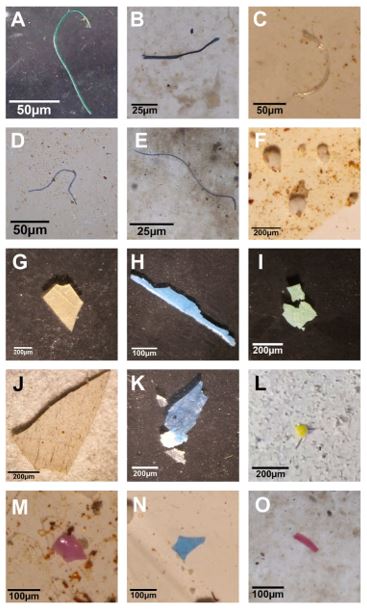
Microplastics (MPs) are recognized worldwide as a growing environmental threat, especially in aquatic ecosystems. This raises concerns for human life and the environment due to the increased use and mishandling of plastics, particularly in urban waterways. This research presents statistics on the prevalence of microplastic particles in waters of five sites within the tributaries and the Shatt al-Arab River in Basrah, southern Iraq: the Qarmat Ali, Al-Khandaq, Al-Nadi Al-Athori, Shatt al-Arab, and Al-Bahadriya rivers. Chemical digestion using 30% H₂O₂ and density separation were used to remove unwanted substances. The water was then examined using optical microscopy and Fourier-transform infrared (FTIR) spectroscopy. The results indicated the existence of microplastics in all samples. The highest MP count was 15 particles/20 L at the Al-Khandaq and Al-Bahadriya River sites using a 125 µm sieve. The highest MPs count was 15.5 particles/20 L at the Al-Nadi-Al Athori River site using a 150 µm sieve. The highest MPs count was 15.5 particles/20 L at the Al-Nadi-Al Athori River site using a 150 µm sieve. The predominant form of microplastics across all study sites was fiber, accounting for 42% of the total. Similarly, the blue color 40% of microplastic was the predominant color across all water samples. FTIR measurements revealed that the predominant MP types were polypropylene 39.3%, low density polyethylene 35.5% and polystyrene 25.2%. MPs in these rivers are affected by human activity along their banks, such as industries, markets, and residential areas.
Metrics
References
Ageel, H. K., Harrad, S., and Abdallah, M. A. (2022). Occurrence, human exposure, and risk of microplastics in the indoor environment. Environ Sci Process Impacts, 24, 17–31. https://doi.org/10.1039/d1em00301a
Alam, F. C., Sari, N. K., Anggraini, R., and Setiawan, F. R. (2023). Microplastic distribution in surface water and sediments of Way Belau River, Lampung, Indonesia. IOP Conf Ser: Earth Environ Sci, 1239, 012002. https://doi.org/10.1088/1755-1315/1239/1/012002
Al-Azzawi, A. S., Al-kindi, G. Y., and Al-Rifaie, J. K. (2024). Occurrence of micro-plastics in Tigris River water in middle of Iraq. IOP Conf Ser: Earth Environ Sci, 1374, 012060. https://doi.org/10.1088/1755-1315/1374/1/012060
Al-Sarraj, F. M. S., and Al-Ahmady, K. K. (2022). Measuring the levels of plastic particulates pollution in the city of Mosul. Int J Health Sci, 6(S9), 141–152. https://doi.org/10.53730/ijhs.v6nS9.12177
Bai, Z., Wang, N., and Wang, M. (2021). Effects of microplastics on marine copepods. Ecotoxicol Environ Saf, 217, 112243. https://doi.org/10.1016/j.ecoenv.2021.112243
Bouadil, O., Benomar, M., Elouarghi, H., Aboulhassan, M. A., and Benbrahim, S. (2024). Identification and quantification of microplastics in surface water of a south western Mediterranean Bay (Al Hoceima, Morocco). Waste Manag Bull, 2, 142–151. https://doi.org/10.1016/j.wmb.2024.01.003
Brown, E., MacDonald, A., Allen, S., and Allen, D. (2023). The potential for a plastic recycling facility to release microplastic pollution and possible filtration remediation effectiveness. J Hazard Mater Adv, 10, 100309. https://doi.org/10.1016/j.hazadv.2023.100309
Cai, Z., Li, M., Zhu, Z., Wang, X., Huang, Y., Li, T., Gong, H., and Yan, M. (2023). Biological degradation of plastics and microplastics: A recent perspective on associated mechanisms and influencing factors. Microorganisms, 11(7), 1661. https://doi.org/10.3390/microorganisms11071661
Chen, H. L., Selvam, S. B., Ting, K. N., and Gibbins, C. N. (2023). Micro plastic concentration in river water and bed sediments in a tropical river: Implications for water quality monitoring. Environ Monit Assess, 195(2), 307. https://doi.org/10.1007/s10661-022-10856-5
Chia, R. W., Lee, J. Y., Kim, H., and Jang, J. (2021). Microplastic pollution in soil and groundwater: A review. Environ Chem Lett, 19(6), 4271–4284. https://doi.org/10.1007/s10311-021-01297-6
Courtene-Jones, W., Clark, N. J., Fischer, A. C., Smith, N. S., and Thompson, R. C. (2022). Ingestion of microplastics by marine animals. In Plastics and the Ocean (pp. 349–366). John Wiley and Sons Ltd. https://doi.org/10.1002/9781119768432.ch12
Cox, K. D., Covernton, G. A., Davies, H. L., Dower, J. F., Juanes, F., and Dudas, S. E. (2019). Human consumption of microplastics. Environ Sci Technol, 53(12), 7068–7074. https://doi.org/10.1021/acs.est.9b01517
Elkhatib, D., and Oyanedel-Craver, V. (2020). A critical review of extraction and identification methods of microplastics in wastewater and drinking water. Environ Sci Technol, 54(12), 7037–7049. https://doi.org/10.1021/acs.est.9b06672
Frias, J. P. G. L., and Nash, R. (2019). Microplastics: Finding a consensus on the definition. Mar Pollut Bull, 138, 145–147. https://doi.org/10.1016/j.marpolbul.2018.11.022
Guo, J., Huang, X., Xiang, L., Wang, Y., Li, Y., Li, H., Cai, Q., Mo, C., and Wong, M. (2020). Source, migration and toxicology of microplastics in soil. Environ Int, 137, 105263. https://doi.org/10.1016/j.envint.2019.105263
Hussein, D. A., Al-Hejuje, M. M., and Mahdi, M. A. (2022). Determination of water quality and pollution by micro and nano plastics in water treatment plants. Egypt J Aquat Biol Fish, 26(4), 47–58. https://doi.org/10.21608/ejabf.2022.248946
John, J., Nandhini, A. R., Velayudhaperumal Chellam, P., and Sillanpää, M. (2022). Microplastics in mangroves and coral reef ecosystems: A review. Environ Chem Lett, 20, 397–416. https://doi.org/10.1007/s10311-021-01326-4
Kay, P., Hiscoe, R., Moberley, I., Bajic, L., and McKenna, N. (2018). Wastewater treatment plants as a source of microplastics in river catchments. Environ Sci Pollut Res, 25(20), 20264–20267. https://doi.org/10.1007/s11356-018-2070-7
Leslie, H. A., van Velzen, M. J. M., Brandsma, S. H., Vethaak, A. D., Garcia-Vallejo, J. J., and Lamoree, M. H. (2022). Discovery and quantification of plastic particle pollution in human blood. Environ Int, 163, 107199. https://doi.org/10.1016/j.envint.2022.107199
Liu, S., Chen, H., Wang, J., and Su, L. (2021). The distribution of microplastics in water, sediment and fish of the Dafeng River, a remote river in China. Ecotoxicol Environ Saf, 228, 113009. https://doi.org/10.1016/j.ecoenv.2021.113009
Liu, Y., Wu, L., Shi, G., Cao, S., and Li, Y. (2022). Characteristics and sources of microplastic pollution in the water and sediments of the Jinjiang River Basin, Fujian Province, China. China Geol, 5, 429–438. https://doi.org/10.31035/cg2022051
Löder, M. G., and Gerdts, G. (2015). Methodology used for the detection and identification of microplastics - a critical appraisal. In Mar Anthropog Litt (pp. 201–227). https://doi.org/10.1007/978-3-319-16510-3_8
Masura, J., Baker, J., Foster, G., and Arthur, C. (2015). Laboratory methods for the analysis of microplastics in the marine environment: Recommendations for quantifying synthetic particles in waters and sediments. NOAA Marine Debris Division Technical Memorandum, USA.
Miller, M. E., Hamann, M., and Kroon, F. J. (2020). Bioaccumulation and biomagnification of microplastics in marine organisms: A review and meta-analysis of current data. PLOS ONE, 15(10), e0240792. https://doi.org/10.1371/journal.pone.0240792
Mohammed, H. K., Ghazi, A. H., and Al-Saad, H. T. (2025). Assessment of microplastic pollution in sediments from Khor Al-Zubair, northwest of Arabian Gulf. Egypt J Aquat Biol Fish, 29(3), 3355–3373.
Mu, X., Qi, S., Yuan, L., Huang, Y., Xue, J., Qian, L., Wang, C., and Li, Y. (2022). Toxicity and behavioral response of zebrafish exposed to combined microplastic and bisphenol analogues. Environ Chem Lett, 20, 41–48. https://doi.org/10.1007/s10311-021-01320-w
Myszograj, M. (2020). Microplastic in food and drinking water-environmental monitoring data. Civ Environ Eng Rep, 30(4), 201–209. https://doi.org/10.2478/ceer-2020-0060
Na, S. H., Kim, M. J., Kim, J. T., Jeong, S., Lee, S., Chung, J., and Kim, E. (2021). Microplastic removal in conventional drinking water treatment processes: Performance, mechanism, and potential risk. Water Res, 202, 117477. https://doi.org/10.1016/j.watres.2021.117477
Ololade, I. A., Apata, A., Oladoja, N. A., Alabi, B. A., and Ololade, O. O. (2024). Microplastic particles in river sediments and water of southwestern Nigeria: Insights on the occurrence, seasonal distribution, composition, and source apportionment. Environ Sci Pollut Res, 31, 1314–1330. https://doi.org/10.1007/s11356-023-31118-y
Oni, B. A., Ayeni, A. O., Agboola, O., and Ohuntade, T. (2020). Comparing microplastic contaminants in (dry and rainy) seasons for Ox-Bow Lake in Yenagoa, Nigeria. Ecotoxicol Environ Saf, 198, 110656. https://doi.org/10.1016/j.ecoenv.2020.110656
Parashar, N., and Hait, S. (2022). Occurrence and removal of microplastics in hybrid growth sewage treatment plant from Bihar, India: A preliminary study. J Clean Prod, 376, 134295. https://doi.org/10.1016/j.jclepro.2022.134295
Queiroz, A., Pedroso, G. B., Kuriyama, S. N., and Fidalgo-Neto, A. A. (2020). Sub and supercritical water for chemical recycling of plastic waste. Curr Opin Green Sustain Chem, 25, 100364. https://doi.org/10.1016/j.cogsc.2020.100364
Sadiq, D., and Al-Hejuje, M. (2025). Evaluation of microplastic pollution in water of Shatt Al-Arab River, southern of Iraq. Egypt J Aquat Biol Fish, 29(3), 1349–1361. https://doi.org/10.21608/ejabf.2025.429787
Saud, S., Yang, A., Jiang, Z., Ning, D., and Fahad, S. (2023). New insights into the environmental behavior and ecological toxicity of microplastics. J Hazard Mater Adv, 10, 100298. https://doi.org/10.1016/j.hazadv.2023.100298
Sheriff, I., Awang, N. A., Halim, H. B., Ikechukwu, O. S., and Jusoh, A. F. (2024). Extraction and analytical methods of microplastics in wastewater treatment plants: Isolation patterns, quantification, and size characterization. Desalination Water Treat, 318, 100399. https://doi.org/10.1016/j.dwt.2024.100399
Song, J., Jongmans-Hochschulz, E., Mauder, N., Imirzalioglu, C., Wichels, A., and Gerdts, G. (2020). The travelling particles: Investigating microplastics as possible transport vectors for multidrug resistant E. coli in the Weser estuary (Germany). Sci Total Environ, 720, 137603. https://doi.org/10.1016/j.scitotenv.2020.137603
Sultan, M. H., Al-Ahmady, K. K., and Mhemid, R. K. S. (2023). Microplastics evaluation in tap water in left side districts of Mosul city, Iraq. J Ecol Eng, 24(8), 353–362. https://doi.org/10.12911/22998993/166312
Tiwari, N., Santhiya, D., and Sharma, J. G. (2020). Microbial remediation of micro-nano plastics: Current knowledge and future trends. Environ Pollut, 265, 115044. https://doi.org/10.1016/j.envpol.2020.115044
Wang, B., and Li, Y. (2021). Plastic bag usage and the policies: A case study of China. Waste Manag, 126, 163–169. https://doi.org/10.1016/j.wasman.2021.03.010
Wang, W., Yuan, W., Chen, Y., and Wang, J. (2018). Microplastics in surface waters of Dongting Lake and Hong Lake, China. Sci Total Environ, 633, 539–545. https://doi.org/10.1016/j.scitotenv.2018.03.211
Wang, Z., Qin, Y., Li, W., Yang, W., Meng, Q., and Yang, J. (2019). Microplastic contamination in fresh water: First observation in Lake Ulansuhai, Yellow River Basin, China. Environ Chem Lett, 17(4), 1821–1830. https://doi.org/10.1007/s10311-019-00888-w
Yan, Z., Liu, Y., Zhang, T., Zhang, F., Ren, H., and Zhang, Y. (2022). Analysis of microplastics in human feces reveals a correlation between fecal microplastics and inflammatory bowel disease status. Environ Sci Technol, 56(1), 414–421. https://doi.org/10.1021/acs.est.1c03924
Zhang, K., Xiong, X., Hu, H., Wu, C., Bi, B., Wu, Y., Zhou, B., Lam, P. K. S., and Liu, J. (2017). Occurrence and characteristics of microplastic pollution in Xiangxi Bay of Three Gorges Reservoir, China. Environ Sci Technol, 51(7), 3794–3801. https://doi.org/10.1021/acs.est.7b00369
Downloads
Published
How to Cite
Issue
Section
License
Copyright (c) 2026 Iraqi Journal of Aquaculture

This work is licensed under a Creative Commons Attribution 4.0 International License.