Using Bioinformatics Application to Predict and Detect Single Nucleotide Polymorphism (SNP) in Eukaryotic Organism
Using Bioinformatics Application to Predict and Detect (SNP)
Keywords:
ANN, Artificial intelligence, 18S rRNA gene, Nucleotide Rotifers.Abstract
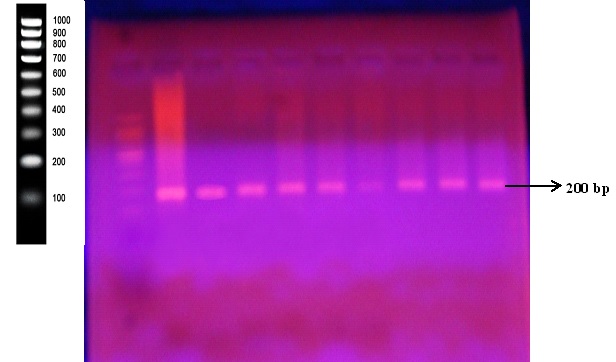
The rapid development of bioinformatics has made data analysis essential for understanding biological processes requiring advanced molecular techniques for detection and prediction based on specific artificial intelligent program and algorithm such as ANN (Artificial Neural Network), The main objective of this research to predictive for rotifers (Brachionus plicatilis and Brachionus calyciflorus) depending on genetic data which including fifty samples from rotifers species collected from different area in Basrah city water. Fifty samples of the 18S rRNA gene products were subjected to PCR amplification and sequencer also applied artificial neural network program to predict and detect SNP, this study considered one of the very encouragement research for highly confirmed technique in different types of rotifers with short time and low cost application.
Metrics
References
Abd Al-Rezzaq, A.J. (2014). A Dignostic and Ecological Study of the Planktonic Species of Rotifera in the Al-Hilla river-Iraq. PhD.thesis, Babylon Univ, College of Sci.(in Arabic).
Adie, A. E.; Beshel, J. A.; Eze, V. H. U.; Bubu, P. E.; Abreka, M.; Maduabuchi, E. C., and Igwe, M. C. (2025). Bioinformatics and Genomics; the Integration of Computational Tools in Understanding Biological Data. JMSAE, Jour Mater Sci & Appl Eng. 4 (4): 1-7.
Becker, K.; Harmsen, D.; Mellmann, A.; Meier, C.; Schumann, P., and Peters, G. (2004). Development and evaluation of a quality-controlled ribosomal sequence database for 16S ribosomal DNA-based identification of Staphylococcus species. J. Clin. Microbiol. 42: 4988- 4995.
Becker, M.; Wiltshire, K. H.; Kong, S. M.; Greve, W., and Renz, J. (2015) Long-term change in the copepod community in the southern German bight. J. Sea Res., 101, 41–50.
Brown, P. D.; Schröder, T.; Ríos-Arana, J. V.; Rico-Martinez, R.; Silva-Briano, M.; Wallace, R. L., and Walsh, E. J. (2020). Patterns of Rotifer Diversity in the Chihuahuan Desert. Diver, 12(10), 393.
Charan, E. S.; Sharma, A.; Sandhu, H., and Garg, P. (2024). FGFR1Pred: an artificial intelligence-based model for predicting fibroblast growth factor receptor 1 inhibitor. Mol. Divers, 28(4): 065-2076.
Faudzi, N. M.; Shapawi, R., and Fui, C. F. (2024). The Importance of Rotifer as Live Feed. Essentials of Aqua. Practices, 41.
Fontaneto, D.(2010). Rotifera Bdelloidea. Summer school in taxonomy ,Valdieri, Itally ,11pp.
Gupta, S.; Janu, N.; Nawal, M., and Goswami, A. (2025). Genomics and Machine Learning: ML Approaches, Future Directions and Challenges in Genomics. Genomics at the Nexus of AI, Computer Vision, and Machine Learning, 437-457.
Hammadi, N.S.; Salman, D.S., and Al-Essa, S.A. (2012). Rotifera of Shatt Al-Arab Region Iraq. Basrah University, Publication about Marin Sci.Center, 258 p.
Hammadi, N.S . (2010) An Ecological Study of the Rotifera of Shatt Al-Arab Region. PhD. thesis , College of Agric. Univ. of Basrah.
Hassan, H.F; Al-Badran, I.A., and Ali, M.H. (2015). “Morphological and Molecular Identification of Collected Brachionus spp From Shatt Al-Arab River”. MS thesis, Univ. of Basrah, Basrah, Iraq.
Iqbal, N., and Kumar, P. (2023). From Data Science to Bioscience: Emerging era of bioinformatics applications, tools and challenges. Procedia Comp Sci, 218, 1516-1528.
Katoh, K.; Misawa, K.; Kuma, K., and Myata, T. (2002). MAFFT: a novel method for rapid multiple sequence alignment based on fast Fourier transform. Nucliec Acids Research. 30(14):3059-3066.
Laakmann, S.; Cornils, A.; Metfies, K.; Koplin, J.; Neuhaus, S.; Bunse, C., and Flores, H. (2025). Of sequences and images-diversity and quantity of Arctic epipelagic zooplankton by an integrative approach. J. Plankton Res., 47(6): fbaf059.
Lu, Y.; Deng, J.B.; Carson, M.; Lu, H., and Lu, L. (2014). Computational methods for the prediction of microbial essential genes. Curr. Bioinform, 9(2): 89-101.
Naito, T. (2019). Predicting the impact of single nucleotide variants on splicing via sequence‐based deep neural networks and genomic features. Human mutation, 40(9): 1261-1269.
Papakostas, S.; Dooms, S.; Triantafyllidis, A.; Deloof, D.; Kappas, I.; Dierckens, K.; De Wolf, T.; Bossier, P.; Vadstein, O.; Kui, S.; Sorgeloos, P., and Abatzopoulos, T.J. (2006). Evaluation of DNA methodologies in identifying Brachionus species used in European hatcheries. Aquac. 255, 557–564.
Qin, W.; Wang, S.; Xia, P.; Tang, F., and Zhao, Y. (2023). Molecular characterization and phylogenetic analysis of Paratrichodina africana Kazubski and El-Tantawy, 1986 based on 18S rRNA gene data with the evolutionary hypothesis of trichodinids. Parasitol. Int., 94, 102735.
Ray, A. (2022). DNA mutation, repair, and recombination. In Genetics Fundamentals Notes ( 433-490).Springer Nature Singapore.
Sambrook, J. and Russell, D.W. (2001). Molecular Cloning: A Laboratory Manual, Cold Spring Harbor Laboratory Press, New York, USA. (1):112–1.118.
Satya, S.; Sharma, S.; Choudhary, G., and Kaushik, G. (2024). Advances in Environmental Microbiology: A Multi-omic Perspective. In Microbial Omics in Environment and Health (175-204).
Slathia, D.; Kour, S., and Kour, S. (2024). First report of Macrochaetus sericus Thorpe, 1893 and Lecane tenuiseta Harring, 1914 (Rotifera: Monogononta) from Jammu waters (J&K), India. J. Threat. Taxa, 16(3): 24923-24929.
Srivastava, U.; Kanchan, S.; Kesheri, M.; Gupta, M.K., and Singh, S. (2024). Types of omics data: genomics, metagenomics, epigenomics, transcriptomics, proteomics, metabolomics, and phenomics. In Integrative Omics (13-34). Academic Press.
Thompson, J. D.; Higgins, D. G., and Gibson, T. J. (1994). CLUSTALW: improving the sensitivity of progressive multiple sequence alignment through sequence weighting position-specific gap penlties and weight mutrix choice. Nucleic Acids Res. 22: 4673-4680.
Winnepenninckx, B.; Backeljau, T.; Mackey, L. Y.; Brooks, J. M.; De Wachter, R.; Kumar, S., and Garey, J.R. (1995). 18S rRNA data indicate that Aschelminthes are polyphyletic in origin and consist of at least three distinct clades. Molecular Biology and Evolution, 12(6): 1132-1137.
Zheng, X.; He, Z.; Wang, C.; Yan, Q., and Shu, L. (2022). Evaluation of different primers of the 18S rRNA gene to profile amoeba communities in environmental samples. Water Biology and Security, 1(3): 100057.
Zmasek, C. M., and Eddy, S. R. (2001). ATV: display and manipulation of annotated phylogenetic trees. Bioinform. 17: 383-384.
Downloads
Published
How to Cite
Issue
Section
License
Copyright (c) 2026 Iraqi Journal of Aquaculture

This work is licensed under a Creative Commons Attribution 4.0 International License.